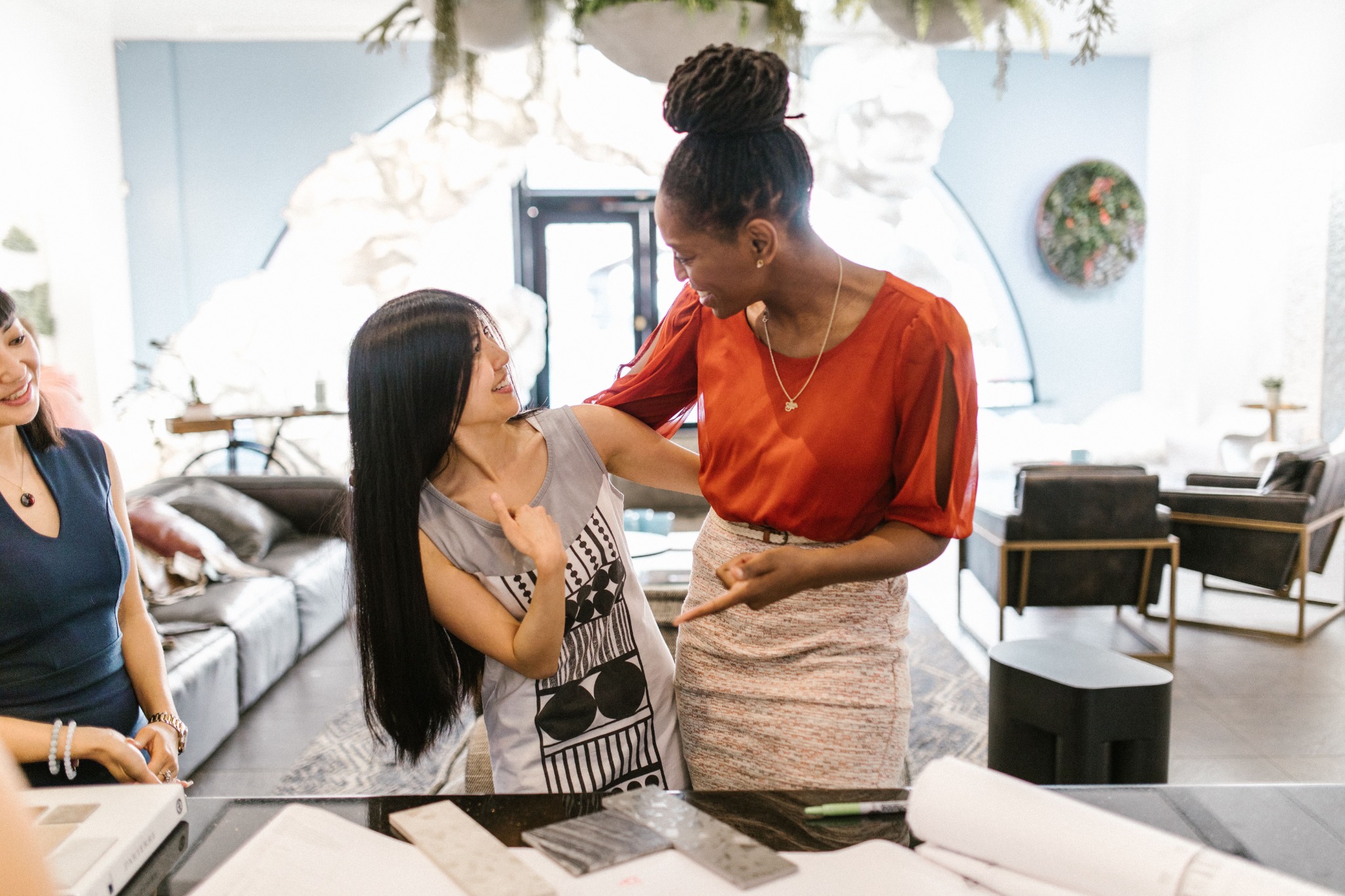
Every recommendation The Jackie Project makes is earned, not assumed. We sit in your building, learn your people, and understand what's actually happening — before we say a word about what you need.
This is a whole-community engagement built on what's actually true — about the people inside your institution and the dynamics between them. Schools, youth-serving organizations, teams: the practice holds because the pattern holds. We arrive with presence, curiosity, and a commitment to building something that actually fits.
We do not enter with a predetermined answer. The work begins with observation and discovery. The Jackie Project's Curriculum and Research Library supports that process — it documents the patterns, not the prescription. It doesn't replace what we find when we're actually in the room.
If DEI trainings, culture audits, or one-day professional development have felt hollow before, it's usually because they were prescribed before anyone sat still long enough to learn what the institution actually needed. This doesn't work that way. The model is simple: observe, then build, then implement — every phase earned before the next begins. Below is what that looks like in practice.
The Jackie Project began inside schools and youth-serving systems, where the consequences of culture become visible quickly. The methodology is designed for institutions where people, power, identity, trust, and outcomes intersect — which is why it doesn't stay confined to one sector.
The methodology has been implemented in environments including:
Observe, build, implement — that's the arc. Here's what each phase actually produces. Every engagement is custom, but the work moves through these three. Each can stand alone. Together, they change a building.
"You can't teach what you won't confront."
The most judgment-free room anyone will ever sit in. Truth Rooms are facilitated sessions where staff confront their own bias honestly, safely, and without an audience keeping score. Self-report only. Never staff reporting on staff.
Grounding practices, self-talk tools, an honest self-inventory, a daily noticing practice, and one anonymous story. It ends in a facilitated Read-Out where the room hears itself for the first time. Built on research. Delivered with care. Closed with ritual, so no one leaves carrying full weight.
The full build. A complete culture framework built from the ground up: facilitated sessions, staff development, family engagement, and an architecture your building runs on after we leave. Not a binder on a shelf. A way the building works.
Co-designed with leadership, informed by every voice in the building, and implemented with you until it holds on its own.
The foundation everything else stands on. A week of full presence inside your building: hallways, classrooms, the spaces between. Anonymous voice from students and staff. Nothing filed with anyone's name on it.
What you receive is a findings read-out and a framework built from what is actually true in your building, not what a template assumed. Every recommendation earned through being present first.
People carry bias, fear, and discomfort into every room they walk into. Pretending otherwise doesn't make a building safer. It just pushes the truth underground, where it does more damage than it would in the open.
Real change starts with people being honest about where they actually stand — not where policy says they should, not where they wish they did. That honesty is the raw material everything else in this practice is built from.
Culture can't be siloed to one group, one month, one program, or one administrator. Real culture shift — the kind that persists after the consultant leaves — happens when students, staff, administration, and families are all in the room at the same time.
This pillar ensures no one is left out. Not the students who are hardest to reach. Not the staff who are most resistant. Not the families who feel furthest from the school. Everyone has a seat and a voice, or the work doesn't hold.
Schools are built on conformity — same pace, same style, same expectations, same expression. The Jackie Project flips that model entirely. Individual identity, learning style, and expression aren't accommodations. They aren't exceptions. They are the actual structure.
This pillar asks schools to stop trying to fit students into systems and start building systems that fit students. That shift — in mindset, in practice, and in policy — is where real belonging gets built.
This practice carries a real name and a real story. It is lineage-based work because culture is passed down, not installed — and what gets passed down is a choice.
Our children deserve more than survival. They deserve adults who are culturally prepared, emotionally equipped, and courageous enough to interrupt the patterns they inherited.
Read the Story of Jackie →An alternative high school serving young people navigating complex academic, social, and life circumstances partnered with The Jackie Project to examine the culture underneath its systems.
The institution remains unnamed intentionally. The Jackie Project protects the rooms we are invited into. The patterns, process, and work are real.
Before designing an intervention, The Jackie Project spent time inside the institution observing how culture was actually being experienced. Three patterns emerged:
The issue was not an absence of people who cared. The issue was that too much of the culture depended on individual people rather than shared institutional practice.
The Jackie Project did not enter with a prepackaged culture program. Observation shaped the work. Through a multi-session Culture Architecture engagement, we facilitated Truth Rooms that created space for staff to name experiences, tensions, and patterns that traditional professional development often moves past.
We introduced Trust Mapping to make visible where trust already existed, where it broke down, and where the institution was relying too heavily on individual relationships. From those conversations, staff began developing shared language and cultural non-negotiables designed specifically for their environment.
What is happening here?
↓ What do we want to be true here?
↓ What will we have to practice differently for that to become true?
The earliest evidence of movement was not a survey score. It was what the institution was becoming able to name. Patterns that had previously been experienced individually could be discussed collectively. Trust became something the team could examine rather than assume.
Staff had language for conversations about expectations, communication, judgment, accountability, and the difference between individual relationships and institutional culture. The institution was no longer only responding to moments as they happened. It was beginning to examine the conditions producing those moments.
The goal of Culture Architecture is not a successful professional development session. It is infrastructure. The engagement is moving the institution toward culture that is less dependent on individual personalities and more supported by shared language, shared expectations, and intentional practices. That includes:
This work is ongoing. We do not manufacture outcomes before they exist. What we can document is the shift from unnamed patterns to shared language, from individual responsibility to institutional examination, and from reacting to culture to intentionally building it.
Presence before prescription. Architecture before activity.
"My staff is always happy to see you. It feels like when we are in the work, it works with us — you aren't talking at us."School Leader · Alternative High School
"The Jackie Project is a game changer. It opened closed practices in a way we now know where we are headed. It's important work, but the lightest I have felt in a long time."School Counselor
Underway with a district high school and a charter middle school — four days of on-site presence in each, staff and student surveys, and behavior and attendance data review.
This is the foundation every engagement is built from. No framework gets proposed before the building has actually been watched, listened to, and learned.
A full observation and framework-building engagement with an elementary school in Denver, completed during the 2024–25 school year.
Delivered a baseline culture expectations document, a shared language guide, and a 30-day implementation plan built from what observation found in their building.
We protect the rooms we're invited into. The Jackie Project's work requires honesty from staff and leadership. Case studies are intentionally de-identified to protect students, staff, and school communities — while still letting us share what we're learning.
Observation, a first Truth Room, and a baseline culture framework. Entry point into the real work — for institutions establishing shared language for the first time.
Full Culture Architecture. Multiple Truth Rooms, trust mapping, behavior and attendance architecture, and ongoing sit-ins across 8 to 10 weeks.
Long-term implementation and advisory. For communities ready to hold The Jackie Project as an ongoing presence, not a single engagement.
Pricing proposals are delivered following the observation phase — because we build what fits, not what's generic. Scope, community size, and implementation depth all shape what this looks like for your community.
If you're ready to talk about what this could look like for your community, start with the contact form. We'll take it from there.
Start a Conversation →No two engagements build the same thing twice. What gets built comes from what observation finds in your building — never off a shelf, never a menu you pick from. Here's a sample of the kind of instruments that can come out of that work.
Staff and students map who they actually trust — not who they're supposed to.
Anonymous, self-report only. Never staff reporting on staff.
Twenty-plus honest self-reads. Nothing tapped is ever saved or sent — a mirror, not a report.
Under two minutes. A handful of things to notice. No writing, no fixing — just gathering.
Every student who crosses an early-warning line gets a named person. Not remediation — relational continuity.
Peer coaching, not evaluation. Built for buildings that don't have enough instructional coaches to go around.
This is a sample, not a menu. What gets built for your building depends on what we actually find there.
We'd rather you know exactly what you're getting into before you call.
Most consultants sell a curriculum. We don't own one. Every engagement starts with observation — real time inside your building, watching before we recommend anything. What gets built afterward is built for your institution specifically, not licensed from a template built for someone else's.
Pricing is built after observation, not before it — because a fair price depends on what we actually find, and scope shouldn't be guessed at from a sales call. Engagements run in three depths of commitment: Foundation, Build, and Partnership. Where you land depends on what your institution needs, not a rate card. Institutional engagements are custom scoped, and most Culture Architecture partnerships represent a five-figure investment, with scope determined by institutional size, observation needs, implementation depth, and length of engagement.
It stays in the room. Truth Rooms are self-report only — never staff reporting on staff — and nothing said in one goes into a personnel file or a performance review. The point is honesty, and honesty requires real protection.
Schools are where this practice began, but the pattern — bias, culture, and power operating inside a building — isn't unique to education. The same approach holds anywhere an institution is responsible for the culture it hands down: hospitals, courts, agencies, teams.
It depends on the tier. The Foundation runs six to eight weeks. The Build runs eight to ten weeks — typically nine facilitated sessions plus four observation visits. The Partnership extends across a full engagement year. None of them are a single visit — culture doesn't move in a day, and we don't pretend it does.
Then it's not time yet, and that's alright. This work asks something real of the people in the room. We'd rather wait for a community that's ready to hear what observation finds than force a process nobody's actually prepared to sit with.
No. Denver-rooted, working nationally. Home base is where the practice started — it's not where it ends.